 Skip-the-line available
 What to See in Aigues-Mortes
A guide to the highlights — the Tour de Constance, the rampart circuit, the grid-planned town and the Camargue setting.
Aigues-Mortes packs a lot into a compact medieval town: a mighty keep with a moving history, a complete circuit of ramparts you can walk, a grid of streets laid out by a crusading king, and the wild Camargue at the gates. This guide covers the highlights — what to see, why it matters and how to fit it into a self-guided visit of an hour or two.
The Tour de Constance
The Tour de Constance is the star of the visit — the great cylindrical keep at the northwest corner of the walls, built by Louis IX between 1242 and 1254 with walls six metres thick at the base. Its guardroom and vaulted halls climb to a terrace that gives the best panorama over the ramparts, the town and the marshes, and it is the natural place to begin, to get your bearings before walking the walls.
The tower carries a powerful second history: it later became a prison, and after 1685 held Huguenot women who refused to renounce their Protestant faith. The most famous, Marie Durand, was imprisoned for thirty-eight years, and the Occitan word 'RÉSISTER' — 'resist' — is traditionally said to be carved on the tower's well. That thread of endurance makes the climb as moving as it is impressive.
The Ramparts
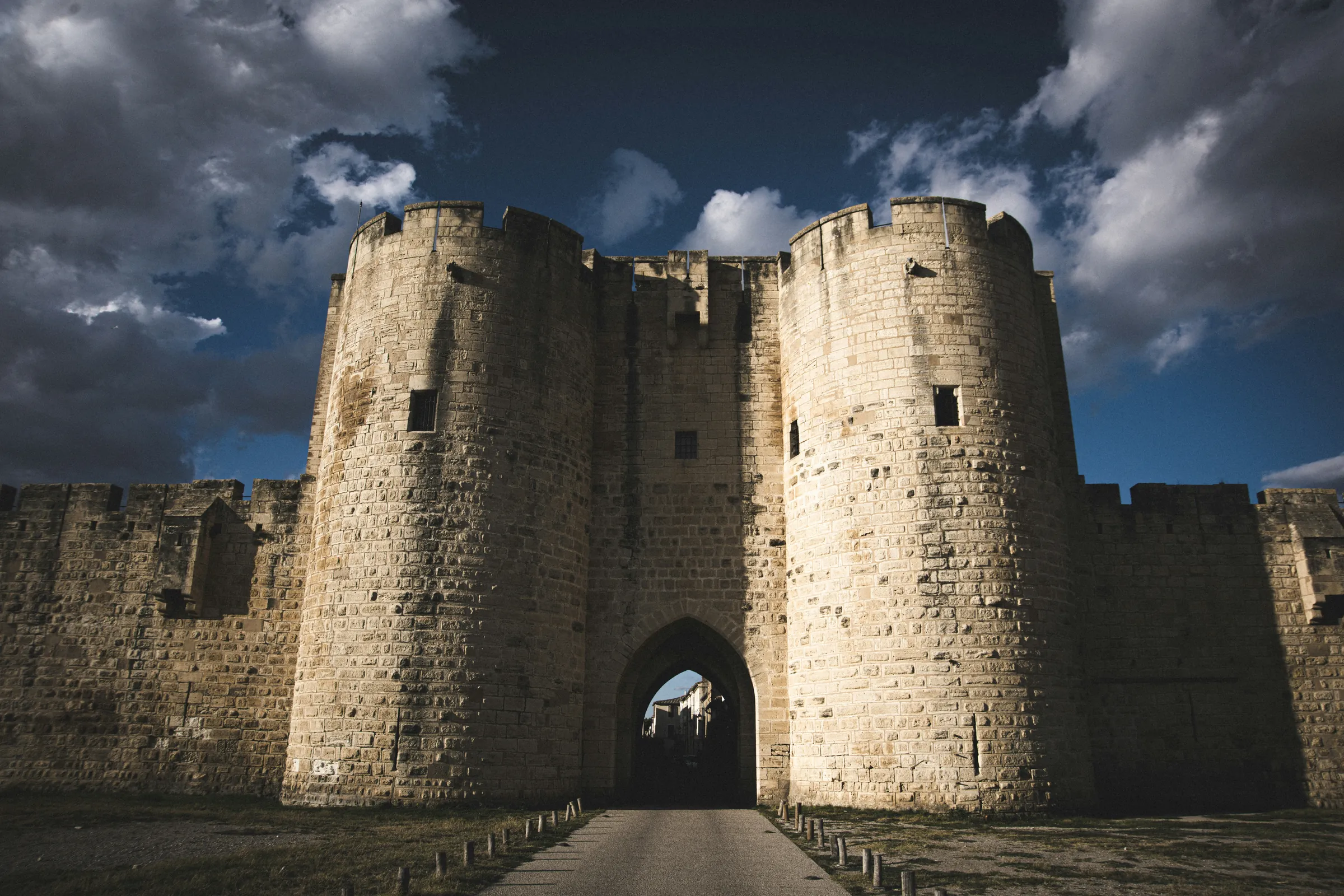
The 1,650-metre circuit of ramparts is the other great highlight, and one of the best-preserved medieval defensive walls in France. Because Aigues-Mortes escaped the heavy nineteenth-century restoration that reshaped Carcassonne, its walls, towers and fortified gates survive almost exactly as raised in the thirteenth and fourteenth centuries, and you can walk the full loop around the town.
The walk gives two contrasting views: down over the grid of medieval streets on the inner side, and out across the flat Camargue and the pink salt lakes of the Salins du Midi on the outer. It is the signature experience of a visit, best enjoyed unhurried and, for the finest light, in the late afternoon.
The Town Within the Walls
Inside the ramparts, Aigues-Mortes is a living town laid out on the strict grid that Louis IX's planners set out in the thirteenth century — a rare survival of medieval town planning. At its heart is the Place Saint-Louis, a shaded square with a statue of the founding king, ringed by cafés and restaurants, and nearby stands the church of Notre-Dame-des-Sablons, the town's simple, atmospheric medieval church.
Wandering the narrow streets between rampart walks is part of the pleasure: shops selling Camargue salt and local produce, terraces for a cool drink, and the everyday life of a small southern town going on within seven-hundred-year-old walls. It makes the perfect break between climbing the tower and walking the circuit.
The Camargue Setting
Part of what to 'see' at Aigues-Mortes is its setting. The town stands alone on the flat salt marshes of the Camargue, and the views from the walls take in the wider landscape: the geometric basins of the Salins du Midi salt works, the wetlands, and — with luck — the flamingos, black bulls and white horses that make the region famous. The salt works themselves can be visited right beside the town.
This marriage of monument and landscape is central to the experience. Few medieval towns sit in so distinctive a setting, and the interplay of golden stone, pink salt lakes and open marsh is what lingers in the memory long after the visit. Allow time simply to take in the horizon from the ramparts.
Frequently asked
What are the main things to see in Aigues-Mortes?
The Tour de Constance keep, the full 1.6 km circuit of intact medieval ramparts, the grid-planned town with the Place Saint-Louis and the church of Notre-Dame-des-Sablons, and the surrounding Camargue with its pink salt lakes.
How long does it take to see Aigues-Mortes?
Allow about 1.5 to 2 hours for the tower climb and the full rampart circuit. Add more time if you want to explore the town's streets, squares and cafés inside the walls.
What is the Tour de Constance?
The great cylindrical keep at the northwest corner, built by Louis IX between 1242 and 1254. It later became a prison for Huguenot women and has a terrace with the best views over the town and marshes.
Is the town inside the walls worth exploring?
Yes — Aigues-Mortes is a living medieval town on its original grid, with the shaded Place Saint-Louis, the church of Notre-Dame-des-Sablons, and streets of shops and cafés between the rampart walks.
Can I see the Camargue salt lakes?
Yes — the pink lakes of the Salins du Midi are visible from the ramparts, and the salt works right beside the town can be visited separately. The setting is a highlight in its own right.
Is Aigues-Mortes a UNESCO site?
The Towers and Ramparts of Aigues-Mortes are a protected French national monument managed by the Centre des monuments nationaux, and one of the best-preserved medieval walled towns in France, well worth a visit for its history and setting.
Is the visit self-guided?
Yes — once inside you explore the tower and ramparts at your own pace, with the audio history sent before your visit. Your ticket carries an entry window, shown on the ticket; arrive within it, and note that last admission is 45 minutes before closing.